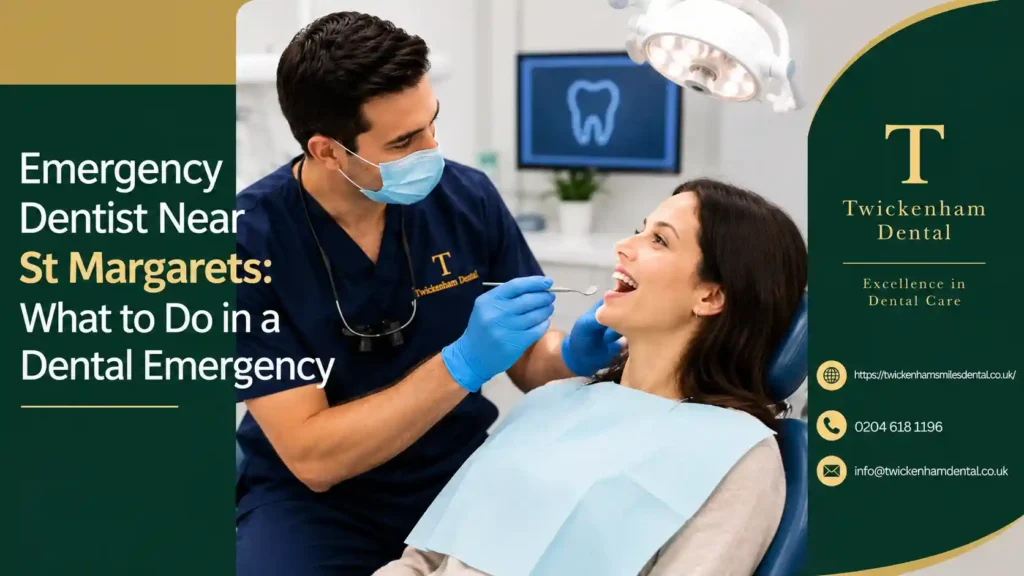
Dental pain rarely happens at a convenient time, and if you are searching for an emergency dentist near St Margarets, you are likely dealing with sudden pain, a damaged tooth, or an injury that needs urgent attention. Knowing what counts as a genuine emergency, and what to do while you wait for care, can make a real difference to your comfort and the outcome of treatment.
At Twickenham Dental Practice, we see patients from St Margarets and the surrounding area who need prompt, reassuring care when something goes wrong unexpectedly. This guide explains the most common dental emergencies, what to do at home, and when to seek help.
By the end, you will have a clearer idea of how to respond if a dental emergency happens to you or a family member, and how our team can support you through it.
What Counts as a Dental Emergency?
Not every dental problem needs to be treated as an emergency, but some situations do require urgent care to relieve pain, prevent infection, or save a tooth.
A dental emergency generally involves severe pain, uncontrolled bleeding, facial swelling, a knocked out tooth, or a broken restoration that is causing discomfort or exposing sensitive tooth structure. If you are unsure whether your situation qualifies, it is always safer to contact the practice for advice.
Severe Toothache
A severe, persistent toothache is one of the most common reasons patients seek emergency dental care. It can indicate deep decay, infection, or nerve involvement, and often will not resolve on its own.
While waiting for an appointment, over the counter pain relief taken as directed on the packaging, along with rinsing gently with warm salt water, can help manage discomfort. Avoid placing aspirin directly on the gum, as this can irritate soft tissue.
Broken or Cracked Tooth
A broken or cracked tooth can happen from biting down on something hard, a fall, or an existing weak filling giving way. The tooth may feel sharp against your tongue, or you might notice sensitivity to hot or cold.
Try to save any broken piece if possible and avoid chewing on that side until you can be seen. Depending on the extent of the damage, treatment may involve a filling, a crown, or in some cases root canal treatment.
Dental Injuries
Falls, sports collisions, and accidents can result in a tooth being knocked loose, pushed out of position, or completely knocked out. These injuries can affect both children and adults, and prompt action often improves the outcome.
If a permanent tooth has been knocked out, try to hold it by the crown rather than the root, rinse it gently if dirty, and if possible, reinsert it into the socket or store it in milk while you seek emergency care as quickly as possible.
Swelling and Possible Infection
Facial swelling, particularly alongside pain, warmth, or a bad taste in the mouth, can be a sign of dental infection. This needs prompt assessment, as infections can sometimes spread if left untreated.
If swelling is accompanied by difficulty breathing, swallowing, or swelling extending towards the eye or neck, this is a signal to seek emergency medical help rather than waiting for a routine dental appointment.
Lost Fillings, Crowns or Restorations
Losing a filling, crown, or bridge can happen suddenly, often while eating, and can leave the underlying tooth feeling sensitive or exposed. While this is uncomfortable, it is not usually as urgent as severe pain or swelling.
You can find guidance on restoring damaged teeth through our crowns and bridges page, and our team can advise whether you need to be seen the same day or within a few days.
When to Seek Urgent Dental Care
You should contact an emergency dentist near St Margarets if you experience severe or worsening pain, a knocked out or displaced tooth, uncontrolled bleeding, visible facial swelling, or a broken tooth that is causing significant discomfort. Early assessment often leads to simpler, more comfortable treatment.
If you are ever unsure whether your situation is urgent, it is best to call the practice directly so we can advise you appropriately rather than waiting to see if symptoms improve.
What to Do While Waiting for an Appointment
While you wait to be seen, there are a few simple steps that can help:
- Take pain relief as directed on the packaging
- Rinse gently with warm salt water to keep the area clean
- Apply a cold compress to the outside of the cheek for swelling
- Avoid very hot, cold, or hard foods on the affected side
- Keep any broken tooth fragments in a clean container
These steps are not a substitute for professional treatment but can help manage discomfort in the short term.
What Happens During an Emergency Dental Appointment
During an emergency visit, our dentists will assess the affected tooth or area, take X-rays if needed, and discuss the most appropriate next steps with you. This might involve pain relief, a temporary or permanent restoration, or further treatment planning.
Every situation is different, so rather than guessing at a diagnosis beforehand, our team will give you a clear explanation once they have properly examined your teeth and gums. If ongoing treatment such as a root canal is needed, this will be discussed with you in detail.
Emergency Dental Care for Patients Travelling from St Margarets
Patients travelling from St Margarets, as well as nearby areas including Twickenham, East Twickenham, Whitton, and Strawberry Hill, can reach Twickenham Dental Practice for prompt emergency assessment. Our York Street location is easily accessible for patients across the local area.
If you are dealing with a dental emergency, you can book an appointment with our team as soon as possible, or contact us directly to discuss your symptoms.
When to Seek Medical Rather Than Dental Emergency Help
Some situations go beyond what a dental practice can safely manage and require urgent medical attention instead. If you experience difficulty breathing or swallowing, rapidly spreading facial swelling, or a high fever alongside dental pain, you should seek emergency medical care straight away, such as attending A&E or calling 999.
For all other dental pain, injuries, or damage, contacting your dentist as an emergency patient is usually the right first step.
Frequently Asked Questions
Hold the tooth by the crown, avoid touching the root, and rinse gently if dirty. If possible, reinsert it into the socket or store it in milk, then seek emergency dental care as quickly as possible for the best chance of saving the tooth.
It can be uncomfortable and cause sensitivity, but it is not usually as urgent as severe pain or facial swelling. Contact the practice so we can advise whether you need same day care or a routine follow up appointment.
Many practices, including ours, are able to see new emergency patients. It is best to call ahead so the team can advise on availability and what information to bring with you.
Take pain relief as directed on the packaging, rinse with warm salt water, and avoid very hot or cold foods on the affected side. These steps can ease discomfort temporarily but do not replace professional dental treatment.
If you have difficulty breathing or swallowing, rapidly spreading facial swelling, or a high fever alongside dental pain, seek emergency medical help immediately rather than waiting for a dental appointment.
Delaying treatment can allow infection or damage to worsen, sometimes leading to more complex and costly treatment later. Prompt assessment by a dentist helps identify problems early and gives you the best chance of a straightforward resolution.
Final Thoughts
Dental emergencies can feel stressful, but knowing what steps to take, and when to seek help, can make the experience far more manageable. Whether you are dealing with a severe toothache, a broken tooth, or an injury, prompt care makes a genuine difference.
If you need an emergency dentist near St Margarets, the team at Twickenham Dental Practice is here to help. You can book an appointment online, or if your situation feels urgent, contact us directly so we can guide you on the best next steps. For further details about our services, you are welcome to get in touch