
Losing a tooth, whether through decay, injury, or gum disease, can affect how you eat, speak, and feel about your smile. If you’re searching for dental implants near St Margarets, you’re likely looking for a long-term way to replace missing teeth that looks and functions naturally. This guide walks through what implants involve, how the treatment process works, what affects the cost, and what to expect during recovery, so you can approach your consultation with realistic, informed expectations.
What Are Dental Implants?
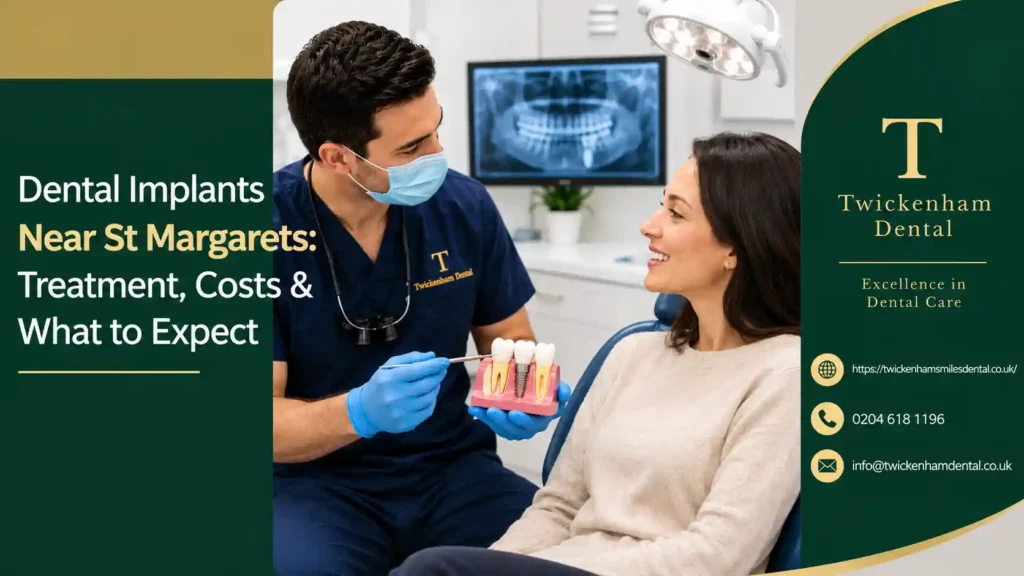
A dental implant is a small titanium post that’s placed into the jawbone to act as an artificial tooth root. Once it has fused with the surrounding bone, a crown, bridge, or denture is fitted on top to restore the visible part of the tooth.
In short: dental implants are a fixed method of replacing one or more missing teeth, using a titanium post fused to the jawbone that supports a custom-made crown, offering a stable alternative to dentures or bridges for many patients.
Unlike removable dentures, implants are anchored directly into the bone, which helps them feel and function more like natural teeth when chewing or speaking.
When Might a Dental Implant Be Suitable?
Not everyone is automatically a candidate for implants, and that’s exactly why a proper assessment matters before any treatment begins. Implants tend to be considered when:
- One or more teeth are missing and the surrounding bone is healthy enough to support a post
- Gum disease is under control (untreated gum disease can affect implant success)
- The patient is otherwise in good general health
- There’s a preference for a fixed solution rather than a removable one
Patients coming to our practice from Richmond, Whitton, and Twickenham often ask about implants after losing a tooth to an old injury or a filling that’s failed one too many times. Every situation is different, which is why we never recommend implants without a full clinical assessment first.
Single-Tooth Implants Explained
For patients missing just one tooth, a single-tooth implant replaces that tooth individually, without altering or relying on the neighbouring teeth for support. This differs from a traditional bridge, which typically requires the adjacent teeth to be prepared and crowned.
A single implant post is placed, allowed to integrate with the bone, and then topped with a custom crown shaded to match your surrounding teeth.
Your Dental Implant Consultation and Assessment
The first step is always a thorough consultation. During this appointment, our dentists will:
- Review your dental and medical history
- Take detailed scans or X-rays to assess bone density and volume
- Check the condition of your gums
- Discuss your goals, whether that’s replacing one tooth or several
This assessment is essential for identifying whether implants are appropriate, or whether another option such as a bridge might suit you better. If you’d like to start with this step, you can book an appointment with our team directly.
Treatment Planning
Once assessment is complete, a personalised treatment plan is created. This outlines:
- The number of implants required
- The expected timeline
- Any preparatory work needed, such as bone grafting in cases of reduced bone density
- The type of restoration (crown, bridge, or full arch)
No two treatment plans look identical, which is why guaranteed outcomes or timelines are never promised before this stage.
Implant Placement
Placement is carried out under local anaesthetic. The titanium post is positioned carefully into the jawbone at a precise angle and depth, planned in advance using your scans.
Most patients describe the procedure as more comfortable than expected, with mild swelling or tenderness afterwards that settles within a few days.
Healing and Integration (Osseointegration)
After placement, the implant needs time to fuse with the surrounding bone in a process called osseointegration. This typically takes three to six months, though it can vary depending on bone quality and individual healing.
During this period, a temporary restoration may be fitted so you’re not left without a visible tooth while healing takes place.
The Implant Crown
Once integration is confirmed, an abutment is attached to the implant, and a custom-made crown is fitted on top. This final crown is shaped and shaded to blend naturally with your existing teeth.
How Long Does the Whole Process Take?
From consultation to final crown fitting, treatment can take anywhere from four months to a year, depending on whether bone grafting or other preparatory work is needed. Straightforward single-tooth cases are often on the shorter end of that range.
Dental Implants vs Bridges
Both restore missing teeth, but they work differently:
- Bridges rely on the neighbouring natural teeth for support, which usually means preparing (filing down) those teeth
- Implants stand independently, without affecting adjacent teeth
If you’re weighing up which suits your situation, our crowns and bridges page has more detail on the bridge option specifically.
Dental Implants vs Dentures
Dentures are removable and sit on the gums, while implants are fixed in place. For patients missing several or all of their teeth, implant-supported options such as All-on-4 can offer a fixed full-arch solution, rather than a traditional removable denture. For those who prefer or require a removable option, our prosthetics service covers denture-based solutions too.
Dental Implant Costs and Factors Affecting Price
At Twickenham Dental Practice, single dental implants start from £2,500, with All-on-4 full-arch treatment starting from £12,500. Several factors influence the final cost, including:
- Whether bone grafting is required
- The number of implants needed
- The type of restoration (single crown, bridge, or full arch)
- The complexity of your individual case
We also offer 0% APR finance through Tabeo, which can help spread the cost of treatment. Full details are available on our Tabeo finance page, and you can view general pricing on our fee guide.
Aftercare Following Dental Implant Treatment
Good aftercare supports long-term implant success. This generally includes:
- Brushing and cleaning around the implant as advised by your dentist
- Attending regular check-ups and hygiene appointments
- Avoiding smoking, which can affect healing and long-term stability
- Reporting any discomfort, looseness, or swelling promptly
How Long Can Dental Implants Last?
With good oral hygiene and regular dental visits, implants can last many years, and often decades. However, this varies by individual, and factors like gum health, bone condition, and general care all play a role. No dentist can guarantee an exact lifespan, but consistent aftercare gives implants the best chance of long-term success.
Book a Dental Implant Consultation in Twickenham
If you’re considering dental implants near St Margarets, Richmond, Whitton, or the surrounding areas, the first step is a proper consultation to assess whether implants are right for you. Our team can talk through your options, including implants, bridges, or dentures, based on your specific needs.
or get in touch via our contact page if you have questions first.
Frequently Asked Questions
Implant placement is carried out under local anaesthetic, so patients typically feel little during the procedure itself. Mild soreness or swelling afterwards is common and usually settles within a few days with simple pain relief.
At Twickenham Dental Practice, single dental implants start from £2,500, with the final cost depending on factors such as bone grafting needs and the type of restoration required. A consultation will give you an accurate, personalised quote.
Reduced bone density doesn’t automatically rule out implants. In some cases, a bone graft can help build up the area before or during implant placement. This will be assessed during your consultation.
Initial healing from the placement procedure usually takes a few days to a week, while full integration with the jawbone takes three to six months before the final crown is fitted.
Implants are fixed in place, while dentures are removable. Many patients find implants more comfortable for daily use, but the right choice depends on individual factors like bone health, budget, and personal preference, which your dentist can help you weigh up.
Yes, 0% APR finance is available through Tabeo, allowing the cost of implant treatment to be spread over manageable monthly payments.