
If you have been putting off booking a dental check-up near Whitton, you are certainly not alone. Life gets busy, and without pain or an obvious problem, it is easy to assume everything is fine. Unfortunately, many dental issues develop quietly long before they become noticeable.
In this guide, we will explain what actually happens during a routine check-up, why these visits matter more than most people realise, and what can happen if they are left too long. By the end, you will understand why regular dental visits are one of the simplest ways to protect your long-term oral health.
What Is a Dental Check-Up and Why Does It Matter?
In short: a dental check-up is a routine examination of your teeth, gums, and overall oral health, designed to catch problems early, monitor changes over time, and keep small issues from developing into more serious or costly treatment later on.
Unlike an emergency visit, a check-up is not just about fixing something that already hurts. It is a preventive appointment, aimed at spotting warning signs before they become painful or complicated to treat.
Why Regular Visits Are More Important Than They Seem
Many patients near Whitton assume that if nothing hurts, there is nothing to worry about. In reality, several common dental problems progress silently in their early stages, without any noticeable symptoms.
Regular check-ups allow your dentist to identify:
- Early tooth decay, before it reaches the nerve
- Gum disease in its earliest, most manageable stage
- Cracks or wear in existing fillings or crowns
- Signs of teeth grinding or bite changes
- Early indicators of oral health issues that need closer monitoring
By the time a problem causes pain, it has often already progressed further than it would have if it had been caught during a routine visit.
What Happens During a Routine Dental Check-Up
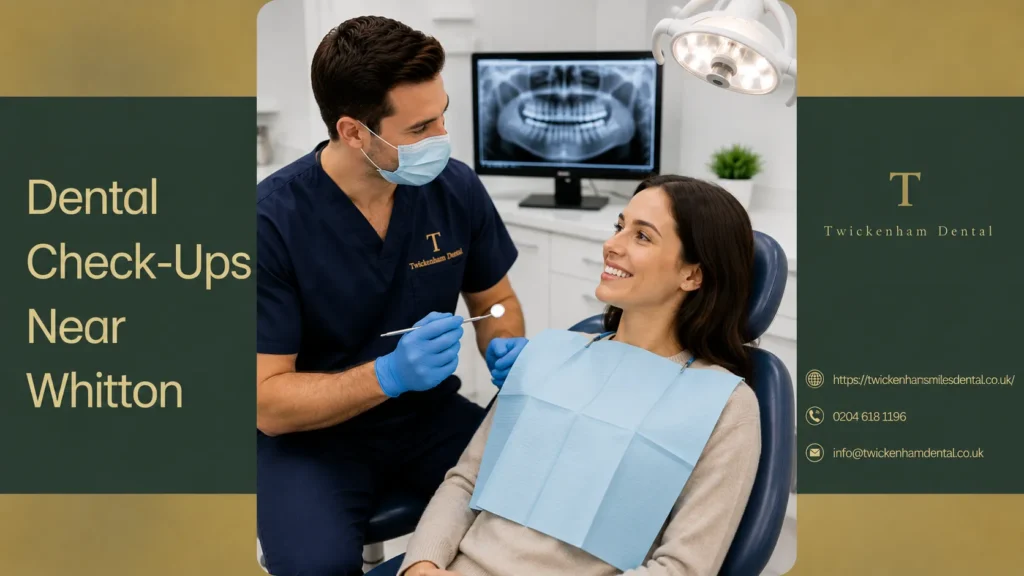
A typical check-up at Twickenham Dental Practice includes a visual examination of your teeth and gums, a review of your dental history, and a conversation about your oral hygiene routine at home. X-rays may also be taken periodically to check for changes below the surface that are not visible during a standard exam.
Many patients choose to combine their check-up with a scale and polish, which removes built-up plaque and tartar that regular brushing cannot fully address. This helps keep gums healthy between appointments and can leave teeth feeling noticeably cleaner.
If your dentist notices anything of concern, they will explain it clearly and talk through your options, without pressuring you into immediate treatment. You can book an appointment with Twickenham Dental Practice to have your teeth properly assessed.
The Real Cost of Skipping Check-Ups
It is a common pattern: a missed appointment turns into a missed year, and a small problem that could have been caught early quietly grows into something more significant. This is one of the main reasons dentists continue to recommend regular visits, even when everything feels fine.
A minor area of decay, for instance, can often be treated with a straightforward white filling if caught early. Left unaddressed, the same issue may eventually require more involved treatment, such as root canal therapy or even extraction.
Beyond cost and complexity, irregular check-ups also make it harder for your dentist to track subtle changes over time, since there is less consistent data to compare against.
Who Should Prioritise Regular Check-Ups?
While everyone benefits from routine visits, some patients should be particularly consistent with attending:
- Patients with a history of tooth decay or gum disease
- Smokers, who face a higher risk of gum-related issues
- Patients with diabetes or other conditions affecting oral health
- Anyone with crowns, bridges, or dental implants that need monitoring
- Children, whose teeth and bite are still developing
Our preventive care services are built specifically to support these ongoing needs, helping patients near Whitton, Hounslow, and Isleworth stay ahead of potential problems.
How Often Should You Actually Go?
Most adults are advised to attend a check-up every six months, although your dentist may suggest a different interval depending on your individual risk factors and oral health history. Some patients with consistently healthy gums and teeth may be reviewed annually, while others may need to be seen every three to four months.
There is no single fixed rule that applies to everyone. The right schedule is something your dentist determines based on what they observe at each visit, not a generic recommendation applied across the board.
Building a Long-Term Relationship With Your Dentist
One underrated benefit of regular check-ups is continuity. When you see the same practice consistently, your dentist builds a clearer picture of your oral health history, making it easier to spot subtle changes that might otherwise go unnoticed.
This is particularly valuable for patients with existing dental work, such as crowns and bridges, where regular review helps confirm everything is functioning as it should.
Making Check-Ups Part of Your Routine
Fitting dental visits into a busy schedule can feel like a low priority, especially compared to more urgent day-to-day demands. However, treating check-ups as a fixed part of your routine, much like an annual health screening, helps prevent small issues from becoming disruptive emergencies later.
If it has been a while since your last visit, there is no need to feel embarrassed. Dentists see this often, and the most useful next step is simply getting back into a routine. You can book a consultation with Twickenham Dental Practice to get things back on track.
Final Thoughts
Regular dental check-ups near Whitton are one of the simplest, most effective ways to protect your oral health over the long term. Catching problems early almost always means simpler, less costly treatment, and a more comfortable experience overall.
If you are due a check-up, or it has been longer than you would like to admit since your last one
today and take a proactive step toward a healthier smile.
Frequently Asked Questions
Most adults should attend a check-up every six months, although your dentist may recommend a different schedule depending on your individual oral health and risk factors.
Skipping check-ups can allow minor issues, such as small areas of decay or early gum disease, to progress unnoticed, often leading to more involved and costly treatment later.
A routine check-up is generally quick and comfortable, involving a visual examination and sometimes X-rays. Any recommended treatment would be discussed and carried out separately.
Yes. Many dental issues, including early decay and gum disease, develop without noticeable symptoms, which is why regular examinations are important even when nothing feels wrong.
Yes. Regular visits help monitor children’s developing teeth and bite, allowing any concerns to be identified and addressed early.
You can book an appointment online or get in touch through our contact page to arrange a convenient time